The Messy Map of My Creative Brain: 9 Spots in My Home That Actually Work
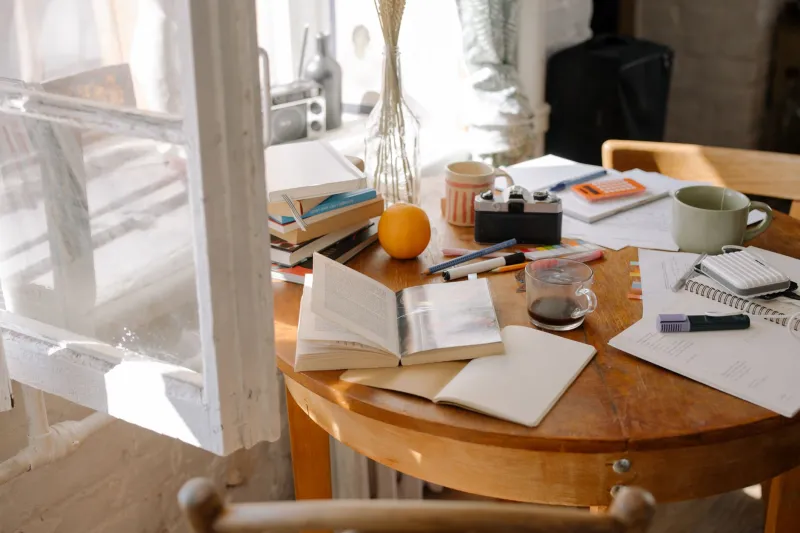
Let me clear something up before we tour the chaos: I do not have a dedicated studio. I have a rental apartment, a radiator that clanks like a jazz drummer with a grudge, and a laundry chair that has been in the same corner since roughly the Obama administration. For years I believed my best work would start the day I owned a clean white desk and a pegboard. It did not. My ideas show up in the weird little zones where I stop performing organized and start thinking like a person.
So here is the honest, photo-friendly, slightly embarrassing map of my home in 2026. Nine spots. Nine small takeaways. Zero storage bins required. If you live in a studio, a spare room, or a kitchen table that doubles as an office, steal whatever helps and ignore the rest.
1. The Junk-Drawer Idea File
Every kitchen has one drawer that becomes a landfill with a handle. Mine holds takeout menus, a dead battery, three rubber bands, and a folded envelope covered in half-sentences. That envelope is the real idea file. When a thought is too small for a project but too stubborn to forget, it goes in the drawer. No app. No color-coding. Just paper and low expectations.
Takeaway: pick one existing drawer or envelope and declare it your no-judgment drop zone. You do not need a filing system. You need a place where bad ideas can sit quietly until they either grow teeth or expire.
2. The Shower-Thoughts Whiteboard
Mine is not in the shower. It is on the bathroom mirror, which is close enough. I keep a dry-erase marker next to the toothpaste because my brain apparently saves its best material for the exact moment I am covered in shampoo. The notes are chaotic: a headline, a grocery list, the phrase do not email him back yet, and a drawing of what might be a duck. It does not matter. The board catches what my phone would take too long to unlock for.
Takeaway: put a cheap writing surface where your brain already wanders. A mirror, a fridge, a piece of painter's tape on the wall. The point is not neatness. The point is catching the thought before it evaporates.
3. The Do Not Fold Laundry-Chair Thinking Spot
The chair in my bedroom is not for sitting. It is a textile-based decision-making center. A sweater pile makes a surprisingly good desk for a notebook, and the mild guilt of not folding keeps me from staying too long. I have outlined whole projects from that chair while avoiding a sock match. It is not glamorous. It is effective.
Takeaway: claim one soft, low-stakes spot as your thinking chair. It can be the end of a couch, a floor cushion, or a kitchen chair with a hoodie on it. Creative work does not need a throne. It needs a place where you can pause without feeling like you should be doing chores.
4. The Kitchen-Table Landing Zone
My kitchen table is a rotating exhibit: laptop, mail, a coffee mug, a notebook, and whatever project I am pretending not to avoid. The trick is that nothing lives there permanently. Every Sunday night I clear a rectangle big enough for one person and one idea. The table resets. The chaos returns. The cycle continues.
Takeaway: if your table is also your desk, define a reset ritual instead of chasing perfect emptiness. Clear one rectangle, not the whole room. A small patch of usable space is more realistic than a lifestyle-photo fantasy.
5. The Back-Door Sticky-Note Doorframe
This is where urgent thoughts go to be dramatic. I stick notes on the doorframe by the back door because I leave through it constantly. The notes are usually things like call the dentist, or fix the ending, or why did you buy more pasta. It looks like a conspiracy board made by a very tired squirrel. But the doorframe catches me in motion, and motion is when I remember what matters.
Takeaway: put reminders where you physically move, not where you think you should look. A doorframe, a light switch, the inside of a cabinet. Your routines are smarter than your intentions.
6. The Half-Dead Plant Windowsill
I have one plant that is thriving and three that are participating in a slow-motion protest. The windowsill still earns its keep because it is where I stand when I need to stare at something other than a screen. Ideas often arrive during the stare. The plant does not need to be Instagram-ready for the windowsill to work.
Takeaway: create a two-minute staring station. A window, a stoop, a parking lot view. The goal is not meditation. The goal is letting your eyes rest somewhere that is not a notification.
7. The Floor Pile Next to the Bookshelf
This pile is not decoration. It is a physical to-be-read stack, a current-project stack, and a I will deal with this later stack that have merged into one ecosystem. I keep a single notebook on top so the pile has a job. When I need an idea, I sit on the floor and flip through the notebook. The floor is comfortable. The pile is honest. Nobody needs a reading nook that looks like a catalog.
Takeaway: give your pile a job by placing one useful object on top of it. A notebook, a pen case, a folder. You are not fixing the pile. You are making it functional.
8. The Phone-Notes Graveyard
My phone notes app is a haunted house of three-word ideas, half headlines, and links I swear I will read later. Once a week I scroll through it and move one note somewhere real: a document, a whiteboard, a sticky note. Just one. The rest can haunt the graveyard until they are ready.
Takeaway: do not try to organize every digital scrap. Rescue one note at a time. A single rescued thought is worth more than a perfectly tagged archive you never open.
9. The Walking Loop Around the Block
Fine, this is not a corner. It is a route, and it counts. My best ideas often show up about seven minutes into a walk, right after I stop trying to solve anything. I bring earbuds but leave them out. I bring my phone but keep it in my pocket. The neighborhood does the rest.
Takeaway: if your home feels creatively stale, leave it for ten minutes. A short walk is a portable studio with better air. You do not need a renovation. You need a change of scenery and a pocket-sized way to capture what shows up.
The big lesson? Polished studios are nice, but they are not the price of admission. Creativity is less about having the right room and more about having the right permission. Permission to be messy. Permission to use the laundry chair. Permission to let the junk drawer be a filing cabinet for your brain.
If you take one thing from this tour, take the pressure off your space. Your apartment is not a failure because it looks lived in. Your kitchen table is not a problem because it holds three projects and a banana. The work happens where you let it happen.