The Tupperware Accords: A Pre-Thanksgiving Peace Plan for Pie, Gravy, and the Good Lids
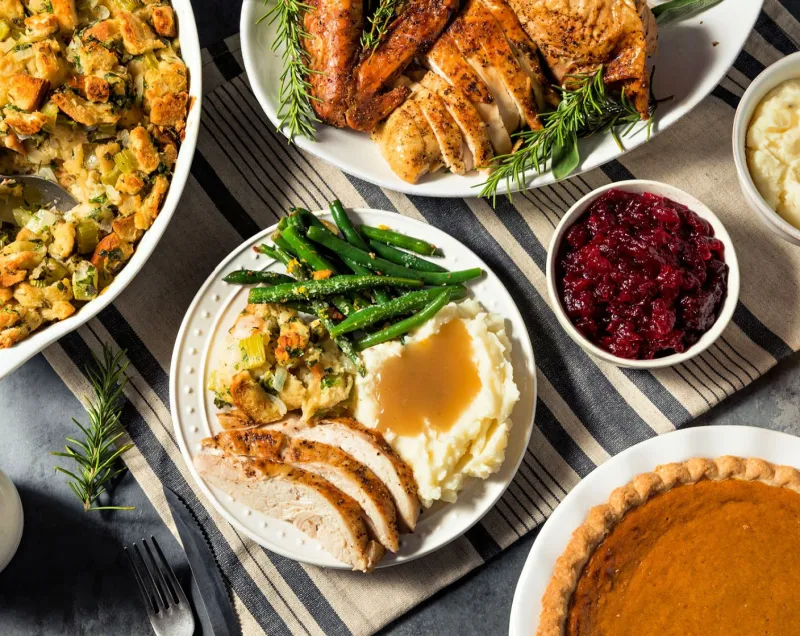
Photo: Thanksgiving leftovers containers color coded labels refrigerator family kitchen, via www.sidechef.com
Thanksgiving 2026 is still more than a week away, and my family group chat has already produced 43 messages and one passive-aggressive poll about who is bringing the sweet potatoes. The turkey is not the stressor. The stressor is what happens afterward: the leftover free-for-all, the missing lids, the gravy that gets treated like a constitutional right, and the annual disappearance of the good containers.
Last Thanksgiving, I watched a harmless request for ‘a little stuffing’ turn into a 20-minute negotiation involving three adults, one cooler, and a niece who kept saying ‘I called dibs’ like she had legal standing. By the time everyone left, my kitchen looked like a small appliance had exploded and the good Tupperware had been redistributed according to whoever packed fastest. I found one container in a coat pocket. I’m not naming names. Mostly because I don’t know which coat.
So this year, I’m trying preventive diplomacy. Before the first casserole dish crosses the threshold, I’m drafting what I’ve been calling the Tupperware Accords: a leftover treaty for my family. It is part joke, part actual system, and entirely born from the fact that I cannot spend another Black Friday hunting for a specific lid while my uncle asks if there’s more pie.
The Problem Isn’t Leftovers. It’s Logistics.
Here’s the thing about holiday leftovers: nobody is actually fighting over cold green beans. The fight is about scarcity and sentiment. The last slice of pie is not just pie. It is a symbol of who was paying attention. The good container is not just a container. It is a vessel with a satisfying click and a lid that has never betrayed anyone.
My family is generous in most ways. We will give you the shirt off our backs. We will not, however, give you the rectangular glass container with the locking tabs. That one has a reputation. It has been to three states and two potlucks. It has seen things.
So the treaty starts with a simple premise: leftovers are a shared resource, but containers are private property with emotional baggage. Once we agree on that, we can negotiate.
Drafting the Tupperware Accords
I wrote the first draft on a yellow legal pad because that felt appropriately dramatic. It included a preamble, three articles, and a section I labeled ‘Emergency Pie Arbitration.’ My sister read it and asked if I was okay. I said I was being proactive. She said I was being ‘a lot.’ Both things can be true.
The treaty’s core rules are not complicated. Every dish that goes home must be assigned to a named container. Every container must have a lid that fits. Every lid must be tested before departure. And nobody may claim ‘the good one’ without putting their initials on a label. This is not about distrust. It is about preventing a repeat of the Great Lid Standoff, which lasted from Friday night until Sunday brunch and ended with everyone eating cereal out of mugs.
We also agreed that the host—me, this year—gets first dibs on pie. Not all the pie. One slice. A reasonable slice. This clause took the longest to negotiate, which tells you a lot about my family.
The Container Registry (Yes, There’s a Spreadsheet)
My favorite part of the treaty is the container registry. It is a spreadsheet with columns for container ID, owner, contents, date packed, reheating instructions, and expected return date. I added a ‘Lid Match’ column because I am not running a charity for orphaned lids.
The registry sounds excessive until you have stood in your kitchen at 9 p.m. on the Saturday after Thanksgiving, holding a lid that fits nothing, while someone in the living room yells ‘Did anyone see my blue bowl?’ The registry is not bureaucracy. It is peace.
We are also using color-coded labels this year. Green means ‘eat by Friday.’ Yellow means ‘freeze if you’re smart.’ Red means ‘do not touch, this is mine, I have plans for it.’ Blue means ‘mystery contents, proceed with caution.’ The blue labels are mostly for my uncle, who believes all leftovers are interchangeable and once combined mac and cheese with cranberry sauce in a way that I am still recovering from.
The Gravy Statute and the Parole Officer
No treaty would be complete without a gravy clause. My family takes gravy seriously. We have opinions about roux. We have debates about giblets. We have an aunt who brings her own whisk ‘just in case.’
The Gravy Statute sets a firm window: gravy may sit in the fridge for 72 hours. After that, it must be reheated, evaluated, and either consumed or released with honors. No gravy may be kept ‘just to see.’ No gravy may be stored in an unlabeled yogurt container. No gravy may be transported in a purse. These are not hypotheticals. These are lessons.
Then there is the parole officer rule. Every container that leaves my house gets a parole officer—the person who brought it or the person who claims it. The parole officer is responsible for its safe return within 30 days. If the container goes missing, the parole officer must appear before the family group chat and explain themselves. We are not monsters. We just want the glass dishes back before Easter.
What Actually Worked (and What My Uncle Ignored)
The treaty is not in effect yet, but I have already tested pieces of it on my immediate family. The labels worked. The spreadsheet got a surprising number of ‘this is actually smart’ responses. The pie clause was accepted with minimal eye-rolling. The parole officer rule is still under review, mostly because my uncle says he ‘doesn’t remember agreeing to that’ and my aunt says he ‘doesn’t remember where he put his keys.’
My uncle has already ignored the blue-label protocol by asking if he can bring his own containers ‘just in case.’ I said yes, as long as he registers them. He said, ‘Register them with who?’ I said, ‘The spreadsheet.’ He said, ‘What spreadsheet?’ We are off to a strong start.
The Real Point of the Treaty
I know this sounds like a lot of work for leftover stuffing. It is. But the Tupperware Accords are not really about containers. They are about giving everyone a script for the part of the holiday that usually goes off the rails. When people know where their food is going, who owns the dish, and how long the gravy has to live, they relax. They stop hovering by the fridge. They stop asking if there’s more pie. They stop hiding containers in coat pockets.
And if the treaty fails? If the lids go missing and the pie disappears and someone tries to smuggle gravy out in a tote bag? Then we will do what my family always does: laugh, argue, and blame the uncle. But at least this year, we’ll have a document. That’s something.