I Went a Whole Year Without Buying a New Hobby. My Wallet Has Notes.
In January 2026, I made a rule that felt almost unpatriotic: no new hobbies. No new starter kits. No new beginner bundles, no new apps that promised to turn me into a potter, no new identity in a box with expedited shipping. I was going to spend the year with the creative pursuits I already owned.
I am writing this in November 2026, which means I have had ten months to test the rule. I would love to tell you it made me serene and focused. It did make me focused, but first it made me bored, twitchy, and weirdly emotional about a bass guitar.
The rule had one loophole: I could not buy a new personality
The rule was not 'no spending money.' I could still buy replacements if something broke. I could buy paint if I ran out of a color I actually used. I could not buy a new hobby category, a new beginner course, or a 'small treat' that was actually the opening move in a whole new lifestyle.
That last part was the hard one. The internet is very good at making a new hobby look like a solution. You watch one video of someone calmly lettering a wedding invitation, and suddenly you are three tabs deep into brush pens. You see a woman on TikTok making sourdough look easy, and your cart somehow contains a proofing basket, a bench scraper, and a linen apron. The starter kit is not really about the supplies. It is about the fantasy of becoming a slightly better, more interesting person by Thursday.
My rule forced me to sit with the fantasy instead of buying it.
What I already owned, and could not hide from
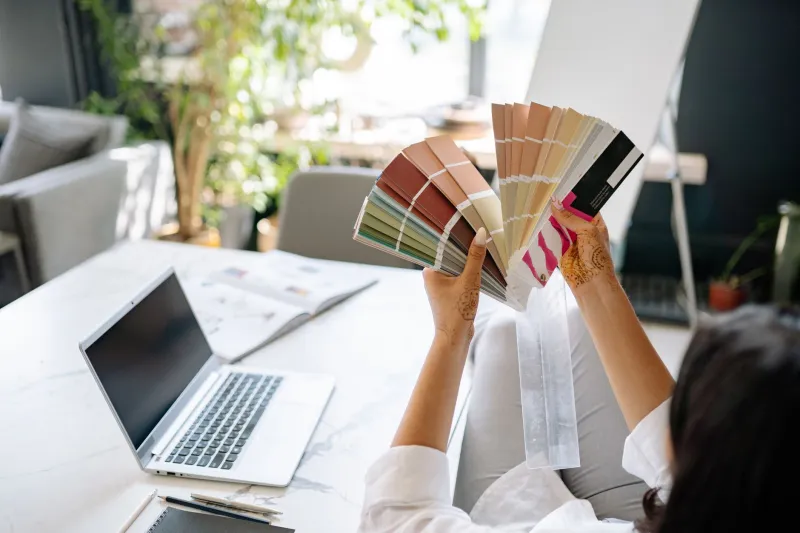
I picked three creative pursuits I already had supplies for: watercolor, bass guitar, and embroidery. None of them were new. All of them had reached the awkward middle stage, which is where most hobbies go to die. Watercolor had become a stack of half-used tubes. Bass had become an instrument that looked great in the corner. Embroidery had become a box of floss and a folder of patterns I had saved but never stitched.
For the first month, I was in withdrawal. Not from the hobbies, but from the shopping. I missed the little hit of researching a new thing. I missed the feeling of adding a beginner course to my watchlist. I missed the clean, hopeful energy of a fresh start.
Boredom showed up fast. I am not going to pretend otherwise. There is a specific kind of boredom that happens when you cannot distract yourself with a new purchase. You are stuck with the thing you already chose, and the thing you already chose is not thrilling anymore. That is the moment the old me would have gone looking for a new hobby. The new rule made me stay.
The starter-kit economy is designed to keep you a beginner
Here is what I noticed about digital life in 2026: the algorithm does not want you to get good at one thing. It wants you to keep starting. Starting is easy to advertise. Starting is photogenic. Starting comes with a bundle discount. The hard middle of a hobby does not come with a bundle discount. It comes with sore fingers and muddy paint and the realization that you are not immediately talented.
I am not anti-starter kit. I love a neatly arranged beginner set as much as the next person. But I do think we confuse buying access with doing the work. A new hobby can feel like a new identity, and a new identity is a lot easier to buy than a new skill is to practice.
That is especially true in the US, where reinvention is basically a national pastime. We love the idea that the next version of ourselves is one purchase away. The problem is that the next version of ourselves usually requires repetition, not a new cart.
What survived
Watercolor survived. I painted badly for weeks, then slightly less badly. I stopped trying to make finished paintings and started making color studies. That sounds fancy, but it mostly means I painted squares and complained about green.
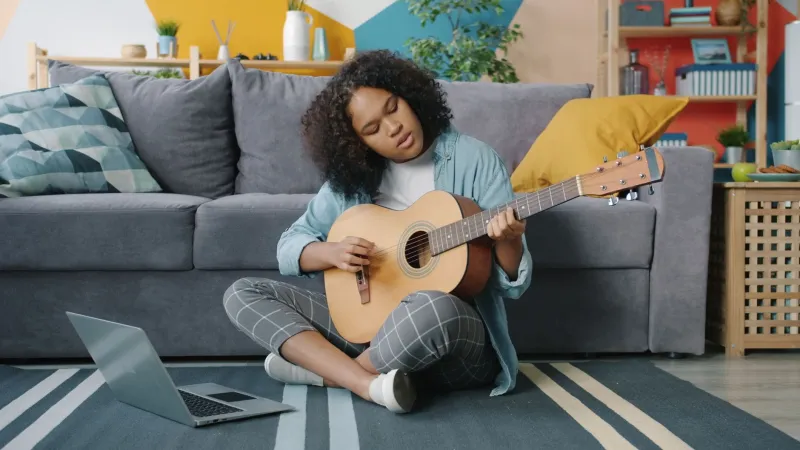
Bass survived too, but only after I made it boring on purpose. I practiced scales for fifteen minutes, twice a week. No new songs, no new gear, no new apps. It was not glamorous. It was just a thing I did on Tuesdays and Saturdays. After a few months, my fingers stopped hurting and my brain stopped treating practice as a crisis.
Embroidery did not survive. I donated the floss and kept two patterns I genuinely like. The rule did not force me to keep everything. It forced me to be honest. I did not want to embroider. I wanted to be a person who embroidered. Those are different things.
If you are eyeing a starter kit right now
Try a thirty-day no-new-hobby rule before you buy anything. Pick one hobby you already own supplies for and give it three scheduled sessions. Not three perfect sessions. Three real ones. Notice whether you are avoiding the hobby because it is hard or because you actually do not like it. Both answers are useful.
Put new hobby purchases on a cooling-off list for two weeks. If you still want the thing after fourteen days, fine. But you may find that the urge was really about wanting a fresh start, not about wanting a pottery wheel.
Make the hard part visible. Tell a friend you are in the muddy middle. Say it out loud: 'I am bad at this and I am not buying a new personality about it.' That sentence has saved me a lot of money in 2026.
And allow yourself to retire things without replacing them. Not every hobby needs to become a lifestyle. Sometimes it is just a phase, and the phase was fun. The goal is not to become a person who never quits. The goal is to quit on purpose, not because a new starter kit made your old one look boring.
Ten months in, I do not feel like I missed out on a secret version of myself. I feel like I finally met the version who was already here, sitting in the corner with a bass guitar, waiting for me to stop shopping and play.