Little Free Library, Big Open Plot: How a Half-Finished Story Became Our Block's Weirdest Book Club
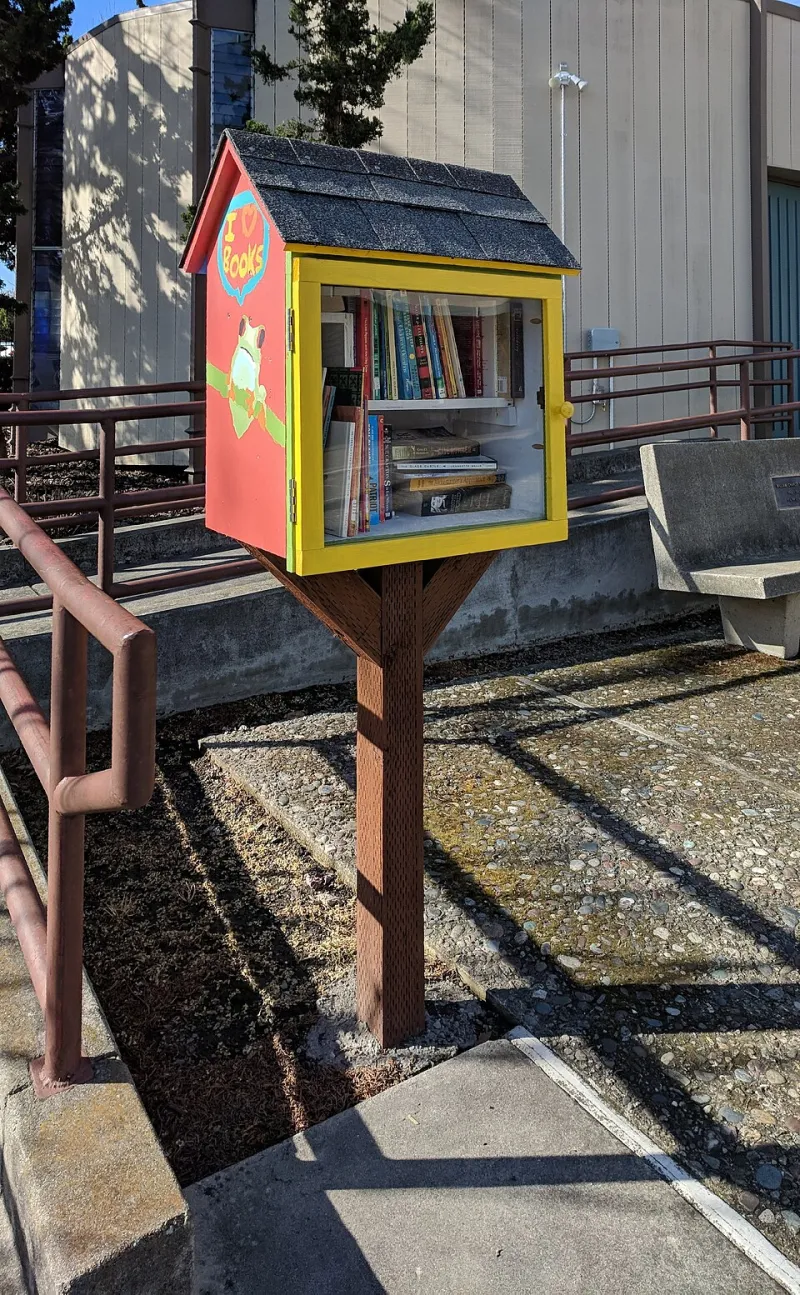
Photo: Grendelkhan, CC BY-SA 4.0, via Wikimedia Commons
I check the Little Free Library on my corner the way some people check their mail: daily, hopefully, and with zero regard for the weather. It’s a wooden box on a post, painted a shade of green that suggests someone had leftover paint and a dream. Most days it holds thrillers with cracked spines and a suspicious number of books about sourdough.
Last month, I found a manila envelope wedged behind a paperback. Inside: three pages, typed, with the words Chapter One at the top and no name anywhere. The story was about a retired lighthouse keeper named June who finds a suitcase on her porch. That’s it. Three pages, one suitcase, zero answers. The last line was “June opened the latch.”
And then nothing.
The problem with an open latch
I stood there for a full minute, holding someone’s unfinished business. I considered leaving it. I considered taking it home and pretending I hadn’t seen it. What I actually did was go inside, make coffee, and write Chapter Two.
Look, the latch was open. Somebody had to look inside the suitcase. In my version, it contained a stack of postcards from a town that doesn’t exist and a key with a label that just said “DO NOT.” I typed it up, added a note — Couldn’t stop thinking about June. Hope you don’t mind. — N. — and tucked it back into the envelope with the original pages.
Two days later, there was a Chapter Three.
I don’t know who wrote it. The handwriting was different from the typing, the style was looser, and it introduced a second character: a neighbor named Gus who claims he can hear the ocean in any seashell, even the fake ones. It was weird. It was fun. It was obviously written by someone who had also stood in front of that box and thought, Well, now I have to know.
The binder era
By the end of the week, there were five chapters and a binder.
I’m not saying I brought the binder. I’m saying the binder appeared, full of page protectors, and I respect that energy. Taped to the inside of the Little Free Library door was a sheet of paper titled “Rules (Draft)” in marker. The rules were:
- One chapter per person until everyone who wants a turn has had one.
- No killing off June. She’s been through enough.
- If you introduce a cliffhanger, you have to be okay with someone else resolving it.
- No spoilers in the neighborhood group chat. (This one got underlined three times.)
- The suitcase stays relevant. We’re not losing the suitcase.
- Sign with initials so we can keep track. Or don’t. We’re not the FBI.
Rule 5 became a problem when someone—initials M.G.—decided the suitcase was a metaphor and started writing chapters about June’s interior life. Beautiful writing. Truly. But the suitcase was just sitting there, unopened, for eight pages. People had thoughts.
The great timeline debate
The low-stakes literary movement had a low-stakes crisis in week three. It turned out that two different people had written chapters set on the same Tuesday, and one of them had June at the lighthouse while the other had her at the farmer’s market. The group chat (which had formed spontaneously, as group chats do) split into factions. Someone made a timeline on a napkin. Someone else said, “Maybe it’s a nonlinear narrative.” Someone said, “Maybe we should just pick one.” We picked one. The farmer’s market chapter got demoted to a dream sequence. The author was gracious about it. I think.
We also had a debate about whether Gus should have a love interest, which was resolved by a vote that I abstained from because I felt weird voting on someone else’s character. Gus got a love interest. Her name is Carol. She repairs lawnmowers. It works.
The author returns
Then, on a Sunday, I found a new note in the envelope. It wasn’t a chapter. It was a Post-it.
I’m the one who wrote Chapter One. I left it there because I couldn’t figure out where it was going and I thought maybe the universe would help. I did not expect the universe to be so… collaborative. Can we talk? — Dana
Dana, it turns out, lives two streets over and works at a dental office. She’d written Chapter One in a waiting room and abandoned it. She’d been checking the box every few days, watching the story grow, and feeling a strange mix of delighted and territorial. “You gave June a dog,” she said. “I never saw her as a dog person.” We talked for an hour on my porch. She had notes. She had opinions about Gus. She had, it turned out, an ending in mind.
We made a deal. Dana would write the final chapter. Everyone else who had contributed could write a short epilogue, one paragraph, no more than 150 words. The binder would stay in the Little Free Library for anyone to read. And the suitcase—the actual suitcase, the one that started everything—would finally get opened on the page, by June, in Dana’s ending, which is the only way it should have happened.
What the box taught me
I’ve written before about creative projects that stay private, and I love those. But there’s something different about a story that belongs to a street. It’s messier. It’s slower. It has a rulebook written in marker. And it turns out that a lot of people are willing to play along if you give them a latch to open.
The binder is still in the box. Dana’s ending is in there, along with eleven epilogues, one drawing of the suitcase, and a note from someone’s kid that just says “I liked the dog.” I don’t know if we’ll do it again. But I’ve started carrying a pen when I check the mail. Just in case.